Skip to content
Talent

Talent measures who is working today, and how well the region’s talent pipeline is being prepared for the jobs of tomorrow.

Best Practices & Deeper Dives

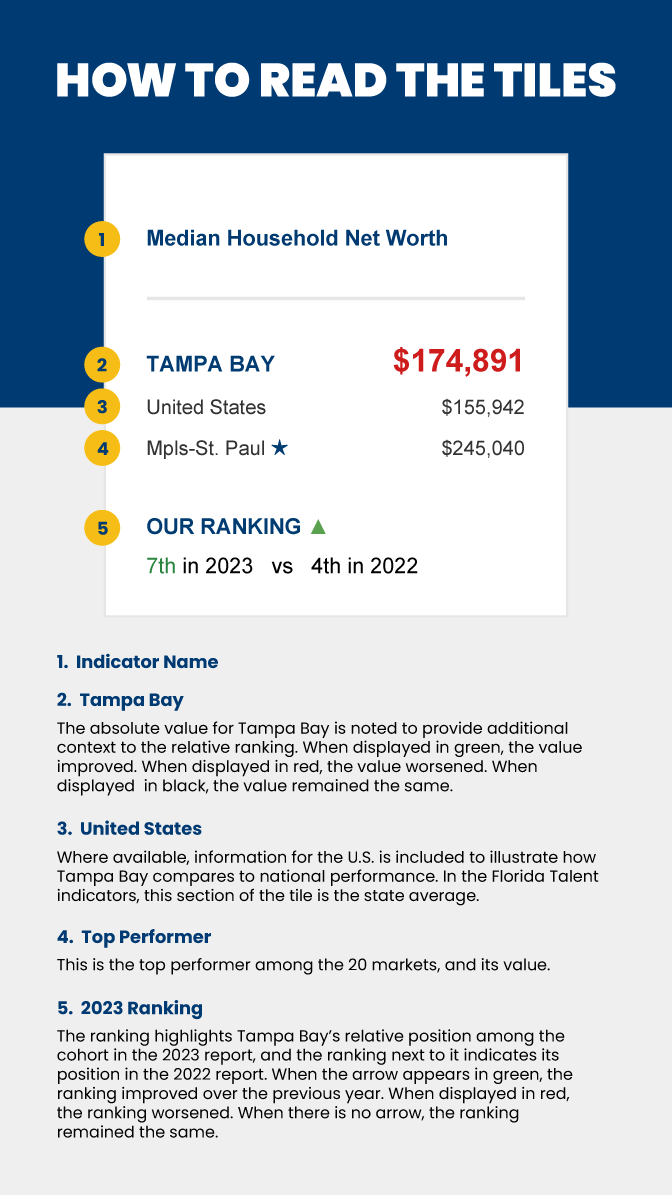
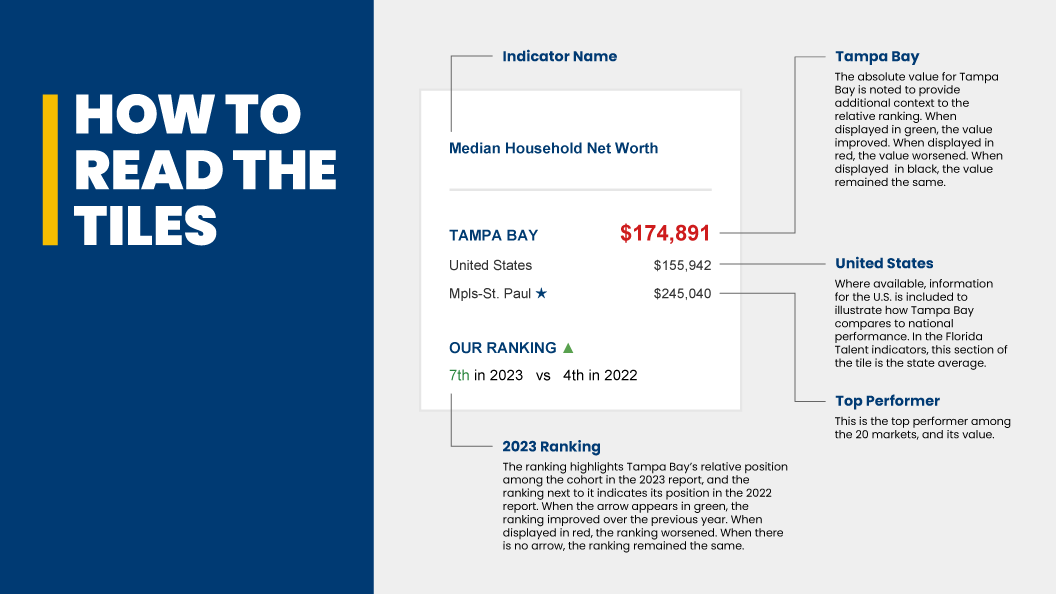
How to Read the Tiles How to Read the Tiles

Participation in Labor Force

This indicator provides a broad-based view of the availability of labor (ages 25-64) in a market. With workforce identified by industry as a key component of growth, availability of a pipeline of prospective talent is imperative. It is important to look deeper into the labor market, identifying more clearly levels of educational attainment and the percentage of the labor force that is currently unemployed.

Opportunity Youth
Labor Force Participation Rate

2026 Takeaways

Labor force participation among those aged 25–64 continues to increase, growing from 78.54% to 79.71%. We are now 0.69 percentage points behind the U.S. average, and have shifted from 20th place to 19th. Our low ranking can be partially attributed to a high percentage of retirees, and early-retirees.

Opportunity youth, previously referred to as disconnected youth (ages 16–24 neither employed nor enrolled in school) showed a small decline, moving from 10.77% to 11.35%. Fourteen of the twenty metro areas tracked had an increased prevalence of opportunity youth.


INCREASING VALUES

  • Increased participation it the workforce is a sign of a healthy economic environment and linked to civic quality.
  • The greater the number of “disconnected youth” the more individuals that are missing key educational, vocational, and employment experiences. This increases the risk for many negative outcomes, each with significant costs to society: long spells of unemployment, poverty, criminal behavior, substance abuse, and incarceration.

DECREASING VALUES

  • Decreased values for Labor Force Participation for Tampa Bay should always be further analyzed by age group as Tampa Bay is an attractive region for early retirees.
  • A lower rate of “disconnected youth” is a positive sign that indicates an engaged and productive age-group that will be active in the workforce. This increases the likelihood of finding meaningful, well-paid work, which can support a number of related civic quality and health outcomes.

CONTRIBUTING FACTORS

Labor Force Participation Rates

  • Number of individuals who are employed or actively looking for work
  • Educational Attainment
  • Trade and Apprenticeship Participation
  • High School Graduation Rates
  • Age

Disconnected Youth Rates:

  • Household Income
  • Economic Strain
  • Parental Educational Attainment Levels
  • Foster Care
  • Proximity to Crime, or Participation in Crime
  • Poor Educational Performance Without Adequate Support